 |
Basket
0 items, £ 0.00

Understanding Knitting Skill Levels; Why TeaCosyFolk Patterns Feel Different for Everyone
TeaCosyFolk patterns don’t fit neat difficulty labels because every knitter brings a different mix of confidence and experience to the needles. This guide explains why the same cosy can feel simple to one person and challenging to another.
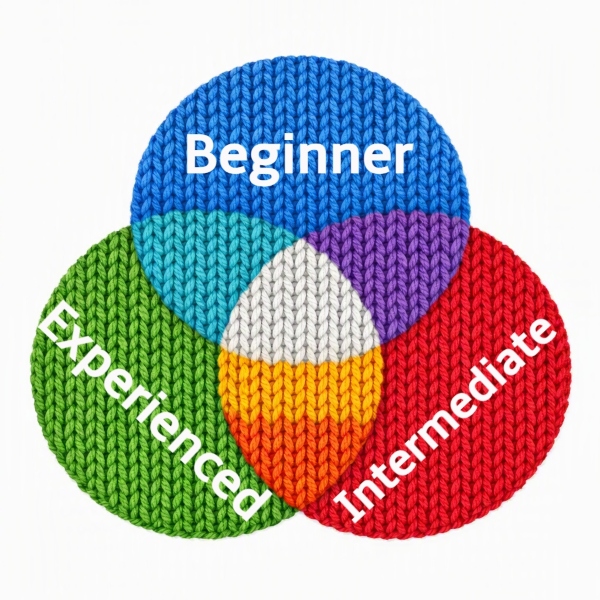 Knitting patterns love to pretend they fit neatly into categories. Beginner. Intermediate. Experienced. As if every knitter learns in the same order, at the same pace, with the same strengths. But knitters are not tidy. They are gloriously inconsistent. One person might be fearless with lace but terrified of picking up stitches. Another might knit a complex toy without blinking but struggle with a simple ribbed hat. Skill level is not a straight line. It is a patchwork.
This is why it is almost impossible to label TeaCosyFolk patterns as easy, moderate or difficult. The patterns themselves are clear, structured and well supported. But the knitter brings their own history, confidence and quirks to the needles. What feels simple to one person might feel baffling to another. And what looks complicated might turn out to be surprisingly straightforward once you try it.
Here are the reasons the usual categories do not quite work.
Every knitter has a different foundation
Some knitters learn knit and purl and stay there for years. Others learn cables before they learn how to fix a dropped stitch. Some knitters understand shaping instinctively. Others need to see it written out row by row. A pattern that uses basic stitches might still feel challenging if it introduces a new kind of construction. A pattern with fancy stitches might feel easy if the knitter already understands how the fabric behaves.
Skill level is not about how many techniques you know. It is about how comfortable you feel when something new appears in the instructions.
Confidence matters more than technique
Many knitters call themselves beginners even when they are doing intermediate work. They follow patterns well, fix mistakes, and understand what is happening on the needles, but they still feel unsure. Others call themselves intermediate because they are willing to try anything, even if they have only been knitting a short time.
Confidence changes how a pattern feels. A knitter who trusts their ability will happily tackle a cosy with shaping, colour work or construction tricks. A knitter who doubts themselves might struggle with the same pattern even if the stitches are simple.
Different brains understand knitting differently
Some knitters think in three dimensions. They can picture how a shape will form, how a decrease will pull the fabric, how a short row will curve a surface. Others prefer flat logic. They like rectangles, straight lines and predictable repeats. Tea cosies often combine both ways of thinking. They use shaping, features, curves and construction. For some knitters this feels natural. For others it feels like a puzzle.
A pattern is not difficult. It is simply written for a particular kind of knitter’s brain.
Finishing skills are their own category
Many knitters can knit anything but struggle with the finishing. Seaming, stuffing, shaping, picking up stitches, closing gaps, weaving ends neatly. These are not beginner skills or advanced skills. They are their own world. A cosy might be easy to knit but require careful finishing. Another might be fiddly to knit but simple to assemble.
Difficulty depends on which part of the process you enjoy.
Experience is not the same as expertise
Some knitters have been knitting for decades and still feel like beginners. Others have been knitting for two years and feel intermediate because they have tried everything. Years do not define skill level. Curiosity does. A knitter who likes learning new things will find moderate patterns easy. A knitter who prefers familiar stitches might find the same pattern challenging.
TeaCosyFolk patterns are designed to be achievable. But every knitter arrives with a different map of what they already know.
Why TeaCosyFolk patterns avoid strict labels
TeaCosyFolk patterns are written to be clear, friendly and supportive. They include shaping, features, colour work, construction and personality. Some cosies look complicated but are built from simple steps. Some look simple but require careful attention. Labelling them easy, moderate or difficult would be misleading because the knitter’s experience changes everything.
Instead, the patterns focus on clarity. They tell you what you need to know, when you need to know it. They guide you through the tricky moments. They assume you are capable, even if you are still learning. And they trust that you will grow as you knit.
The truth is simple. A pattern is only as difficult as the moment you meet it. What feels challenging today might feel easy next month. What feels impossible might become your favourite technique. Skill level is not fixed. It moves with you.
Browse the TeaCosyFolk knitting patterns here.
Tags: yarn