 |
Basket
0 items, £ 0.00

How to Create Knitted Pleats with or without Extra Needles
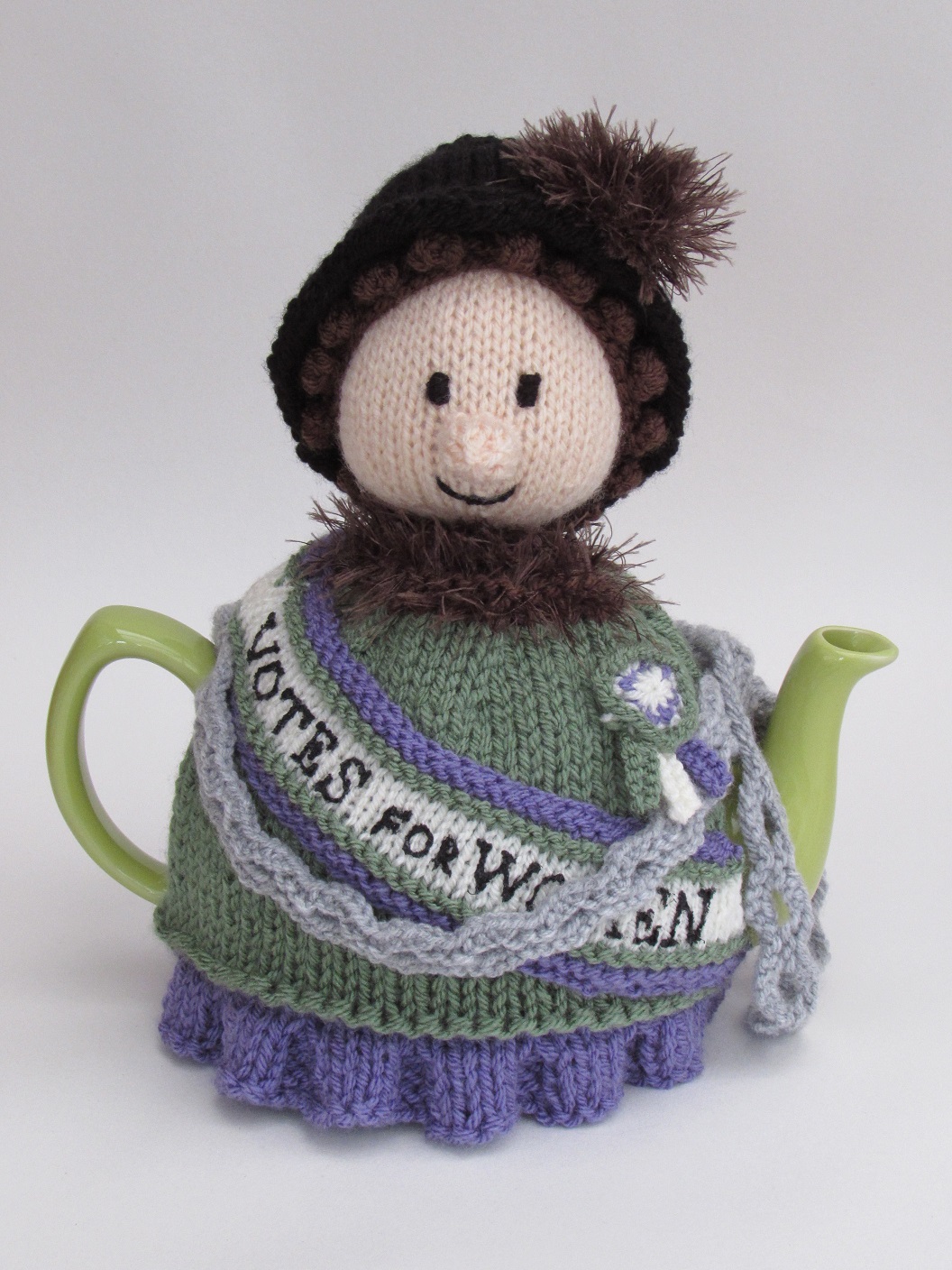
This help page shows you how to work the pleat row used in the Suffragette and Mammogram Tea Cosy knitting patterns. The pleats form the main skirt section of the cosy and give it its distinctive shape. The video demonstrates the technique clearly so you can follow along stitch by stitch.
What Are Knitted Pleats and Why Use Them
Pleats are one of my favourite ways to finish the bottom of a tea cosy skirt. They give a lovely vintage feel, just like the pleated skirts that were so popular in the 1940s and 50s. They add movement, structure and a little bit of drama, and they work beautifully on designs like the Suffragette and Mammogram tea cosies.
There are two main ways to create knitted pleats, and both are shown or explained here so you can choose the method that suits you best.
How to Knit Pleats Using the Three‑Needle Method
The first method is the one demonstrated in the video. This is the more traditional pleat technique, where the folds are created using three knitting needles. After working a series of wide rib stitches, such as K4, P4 repeated across the row, you slide the next set of stitches onto a double pointed needle and hold it either at the back or the front of the work depending on which part of the pleat you are forming. You then knit the stitch from the working needle together with the stitch from the held needle. This reduces the stitch count by half and creates a crisp, folded pleat. It looks complicated at first glance, but once you see it done, the logic of the fold makes perfect sense.
How to Knit Pleats Without Extra Needles
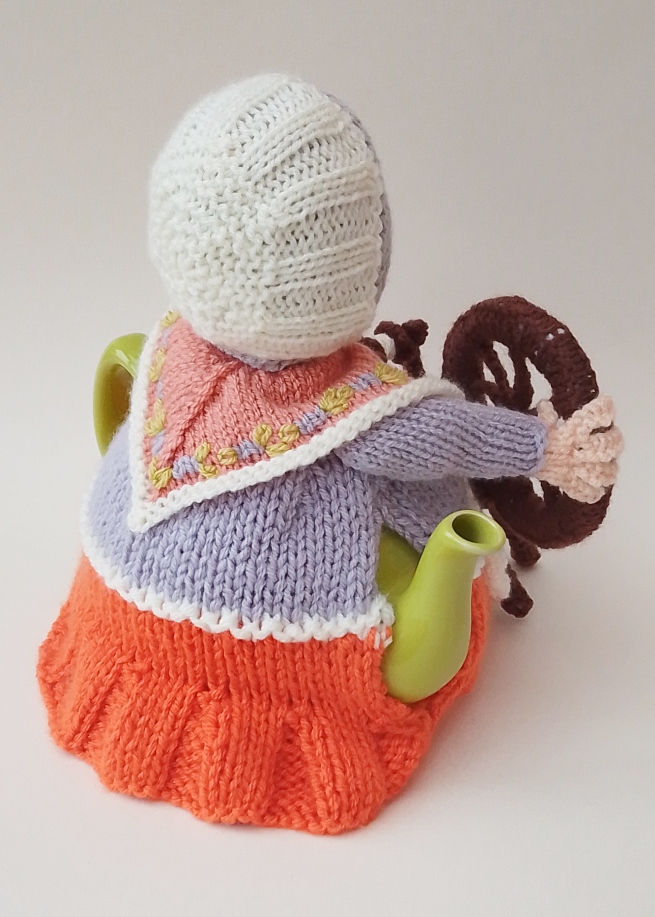
The second method is a gentler way to create a pleated effect without juggling extra needles. After the wide rib section, you shape the pleats gradually by decreasing on either side of the back of each pleat on every row. The direction of the decreases is important because it helps the fabric appear to close inwards. For example, you might work P4, then SKPO, K2tog, P4 repeated to the end. This draws the fabric in neatly and gives a softer pleated look that still reads beautifully on a tea cosy.
Pleats are also ideal for kilt-inspired designs. Stripes alone can suggest tartan, but it’s the knitted pleats that give the fabric that unmistakable kilt structure. Whether you want a sharp fold or a softer drape, pleats add character and movement to the bottom of a cosy and make the whole piece feel more finished.
Which Tea Cosy Knitting Patterns Use Knitted Pleats
Knitted pleats appear across a range of TeaCosyFolk designs, and each pattern shows how the technique changes the look and structure of the skirt. Below you can see examples of both the three‑needle method and the decrease‑shaped pleats, so you can compare the effects side by side.
How the Three‑Needle Method Shapes Pleats in Different Designs
Several TeaCosyFolk designs use pleats, and each one shows how the technique affects the finished look. There are two main styles of pleating used across the patterns: the crisp three‑needle method and the softer decrease‑shaped pleats. A few designs also blend techniques to create more unusual effects.
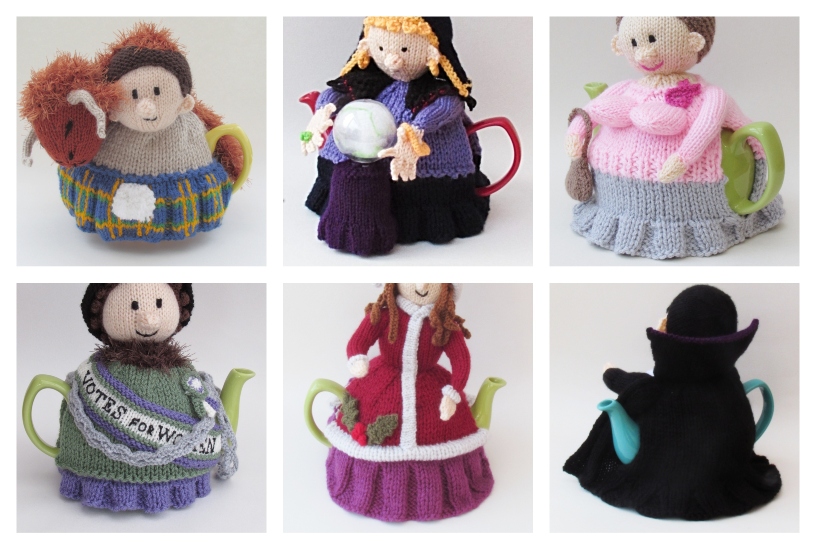
The three‑needle pleat technique is used in the Fortune Teller Tea Cosy, both for the hem of her skirt and for the edge of her tablecloth. This method also appears in the Victorian Ice Skater, Count Dracula, Hogmanay Hoolie, Mammogram and Suffragette tea cosies. These designs all have sharp, well‑defined folds that stand out clearly and give the skirt a structured, vintage look.
How the Decrease Method Shapes Pleats in Different Designs
The second style of pleating shapes the folds by decreasing on every row at the top of each pleat. This creates a softer, more gradual pleat without using extra needles. You can see this technique in the Spinning Jenny, Florence Nightingale and Harpist tea cosies, where the pleats have a gentle drape and a more fabric‑like flow.
Marie Curie and the Victorian Flower Girl use a variation of this second method. They decrease on every row to form the pleat, but then work a few rib rows above it. This gives the pleats a leaf‑like shape, adding texture and movement to the skirt.
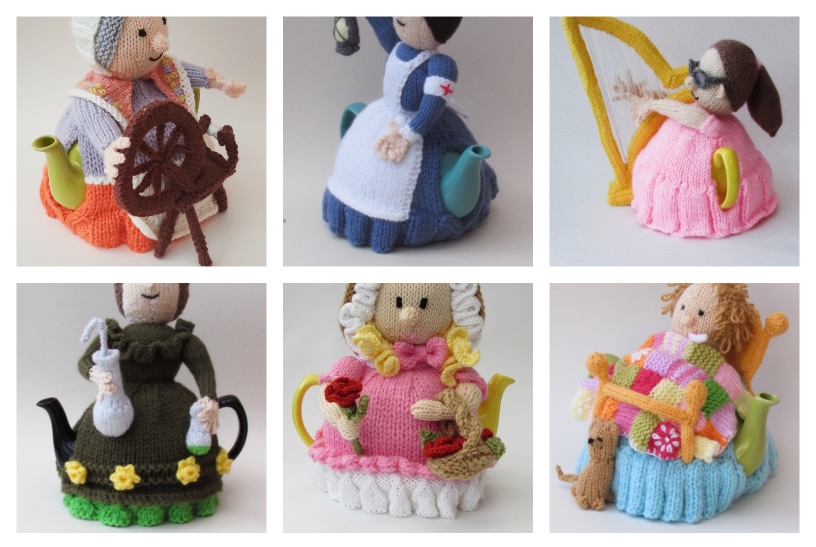
The Get Well Soon Tea Cosy has a longer rib section before the decreases begin, which creates the pleated valance of the bed. The effect is soft and gathered, perfect for the cosy’s fabric‑draped look.
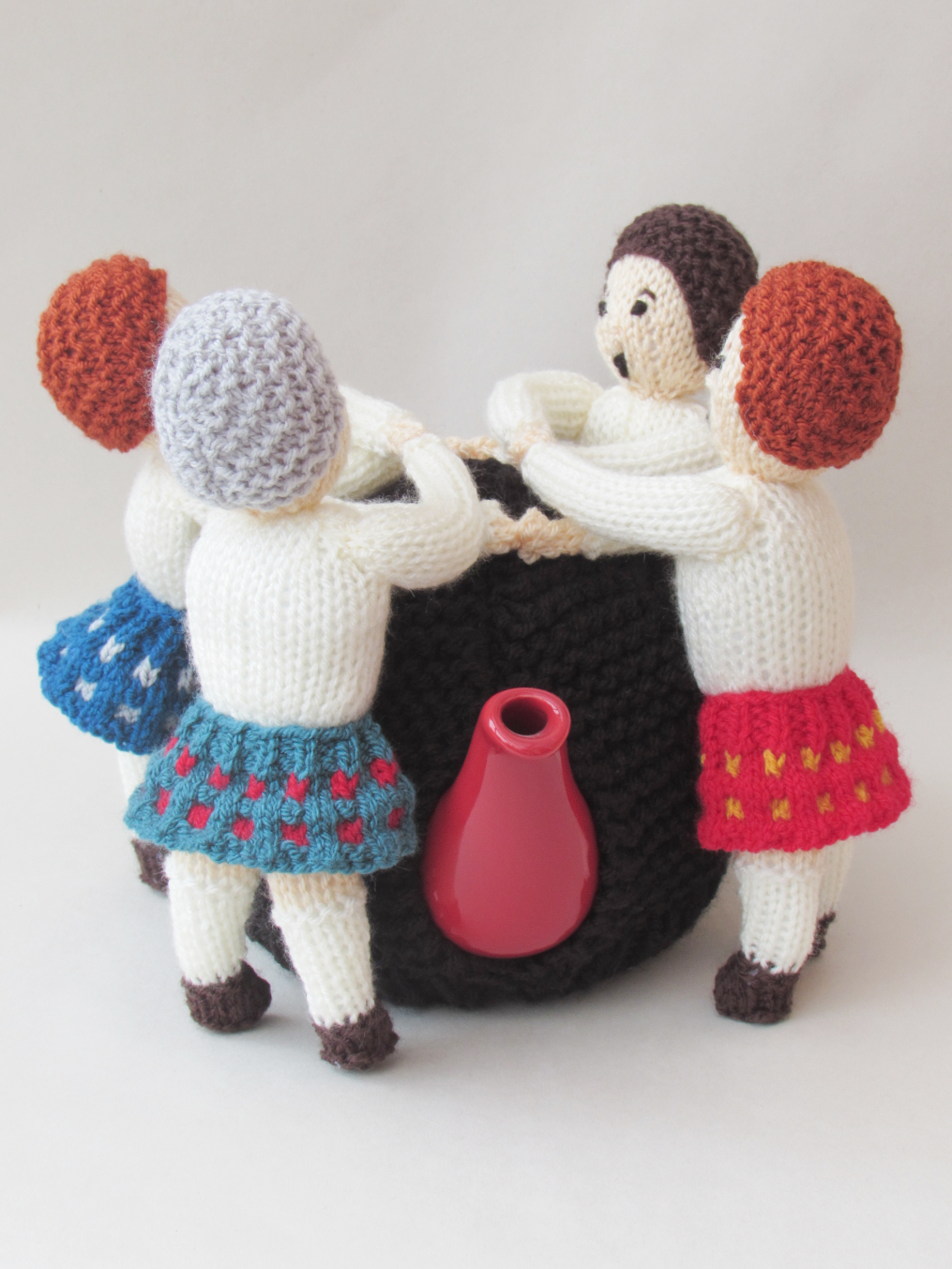 The dancers on the Auld Lang Syne tea cosy have kilts with only a single row of decreases after the rib. This gives just a hint of pleating, enough to suggest the structure of a kilt without creating full folds. Combined with stripes, it gives a subtle tartan impression.
Frequently Asked Questions
Can you knit pleats without using extra needles?
Yes. After working a wide rib, you can shape pleats gradually by decreasing on either side
of the back of each pleat on every row. This creates a softer pleated effect without
juggling additional needles.
Why do my knitted pleats look uneven?
Uneven pleats usually happen when the decreases lean the wrong way or when the rib section
is not wide enough. Make sure your decreases mirror each other so the fabric closes neatly
and the folds line up.
What patterns use this pleat technique?
TeaCosyFolk uses pleats in designs such as the Suffragette and Mammogram tea cosies, and
the technique also works well for kilt-inspired skirts and other vintage-style cosy designs.
Knitted Pleats for Vintage‑Style Skirts
Knitted pleats are a simple way to add shape and movement to a tea cosy, and both methods create their own distinctive look. The three‑needle technique gives sharp, structured folds, while the decrease method produces a softer drape that blends naturally into the fabric. Once you understand how each fold is formed, it becomes easy to choose the style that suits your pattern. Whether you’re knitting a vintage‑style skirt, a kilt‑inspired design or a cosy with a more decorative hem, pleats add character and help the finished piece feel complete. This guide and the video should give you everything you need to try the technique with confidence.
Tags: SK