 |

Cosy Companion Guide How to Fix Dropped Stitches (Without the Panic!)
Dropped a stitch? Don’t panic; here’s how to spot it, rescue it and keep your knitting on track with TeaCosyFolk's quick guide to understanding, fixing and avoiding dropped stitches in your knitting.
Dropped stitches are one of the most common knitting problems, and they always seem to appear at the worst possible moment — usually when you’re feeling relaxed and everything is going smoothly. One second your stitches are behaving, and the next there’s a little ladder running down your work and your heart sinks. But the good news is this: dropped stitches look far scarier than they actually are, and once you know how to rescue them, they lose all their power to frighten you.
Why stitches drop in the first place
A stitch can slip off the needle for all sorts of reasons:
• You’ve put your knitting down mid‑row
• You’ve tugged the yarn a little too firmly
• You’ve accidentally nudged a needle
• You’re working with slippery yarn or metal needles
• You’re knitting on the sofa and the dog/cat/partner has “helped”
It happens to every knitter, no matter how experienced. The important thing is knowing what to do next.
How to spot a dropped stitch
A dropped stitch leaves a little vertical ladder — a series of horizontal bars where the stitch has unravelled downwards. The longer you keep knitting without noticing, the further it travels. The sooner you catch it, the easier the rescue.
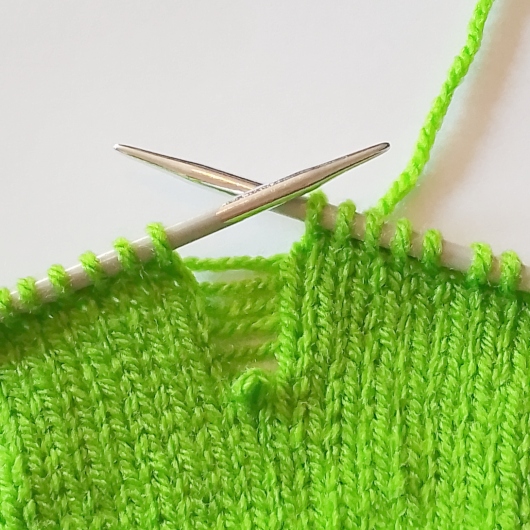
A dropped stitch forming a long ladder — the classic sign that a stitch has slipped off the needle.
How to fix a dropped stitch
Here’s the calm, simple method that works every time:
1. Stop knitting immediately
Don’t try to knit past it. Don’t pull anything. Just pause.
A dropped stitch secured on a crochet hook — the first step to stopping the ladder and fixing the mistake.
2. Grab a crochet hook
This is the magic tool for rescuing stitches. If you don’t have one, a spare needle will do, but a hook makes it effortless.
3. Find the lowest loop
This is the actual dropped stitch — the one that’s trying to escape.
4. Work your way back up the ladder
Use the crochet hook to pull each horizontal bar through the loop, one at a time, until you reach the top again.
If you’re on a knit row, pull the bar from front to back.
If you’re on a purl row, pull the bar from back to front.
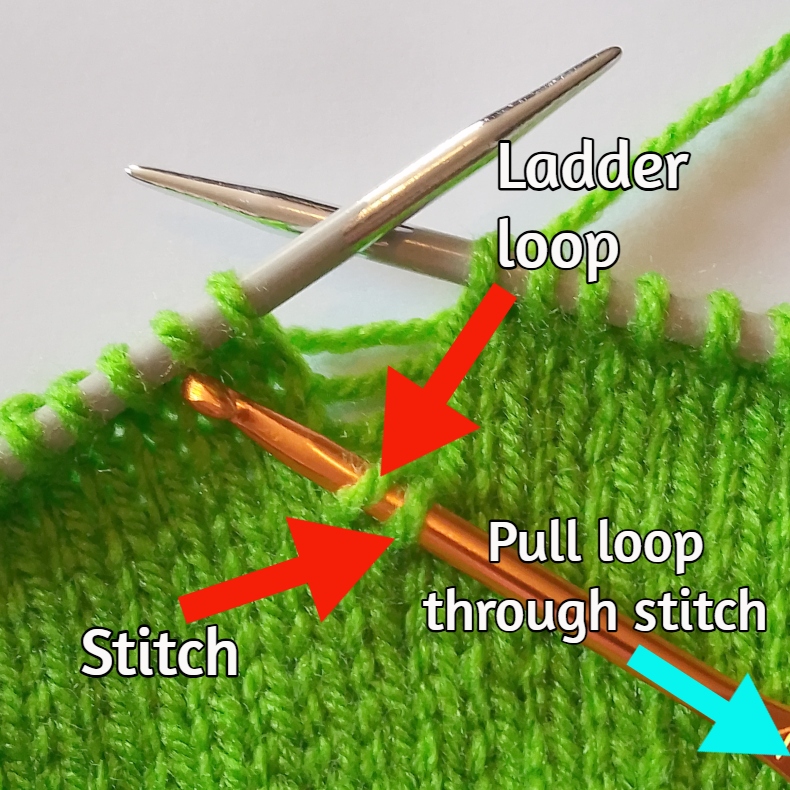
How to fix a dropped stitch: pull each ladder loop through the stitch with a crochet hook to climb back to the current row.
You’re simply recreating the stitches that unravelled.
5. Pop the rescued stitch back onto your needle
Make sure it’s sitting the right way round — right leg at the front, left leg at the back — and carry on knitting as if nothing happened.
What if the stitch has dropped several rows?
Still fixable. It just takes a few more steps up the ladder. The crochet hook does all the hard work for you.
What if the stitch has run into shaping?
If you’re working increases, decreases or patterning, just rescue the stitch back to the correct row, then follow the pattern again. The fabric will settle once you continue.
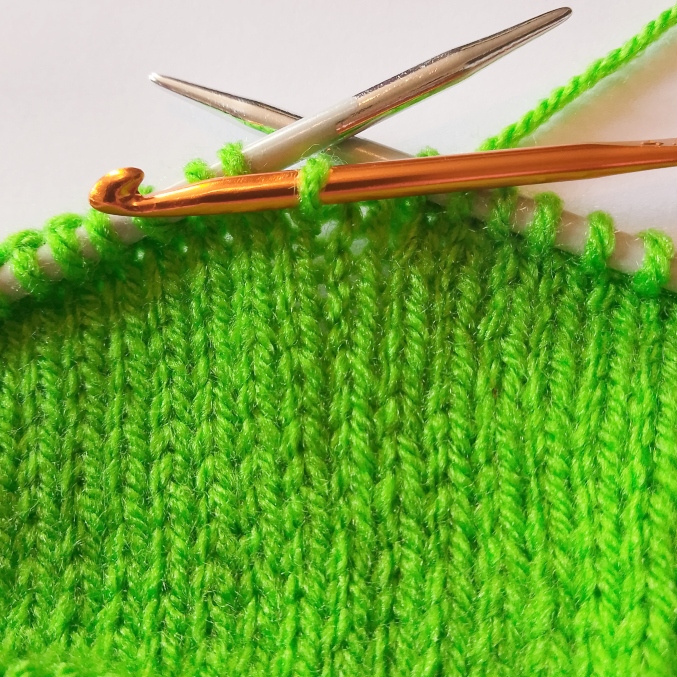
A repaired dropped stitch after lifting each ladder loop back into place with a crochet hook.
How to prevent dropped stitches
A few simple habits make a big difference:
• Always push your stitches well onto the needle before putting your knitting down
• Use needle stoppers if you’re working on straight needles
• Choose needles with a slightly grippy surface if you’re prone to slips
• Check your work every few rows — a quick glance saves a lot of worry
The most important thing to remember
Dropped stitches are not disasters. They’re tiny detours. Once you know how to rescue them, they become just another part of knitting — like counting rows or weaving in ends. And the confidence you gain from fixing your first one is enormous.
Your knitting is never ruined. It just needs a little gentle encouragement to get back on track.
Tags: TeaCosyFol