 |
Basket
0 items, £ 0.00

The Scarecrow That Started It All, How One Knitted Toy Sparked a Lifetime of Sculptural Knitting
The story of the knitted scarecrow my grandma made and how it inspired a lifetime of creating characterful, sculptural knitting designs.
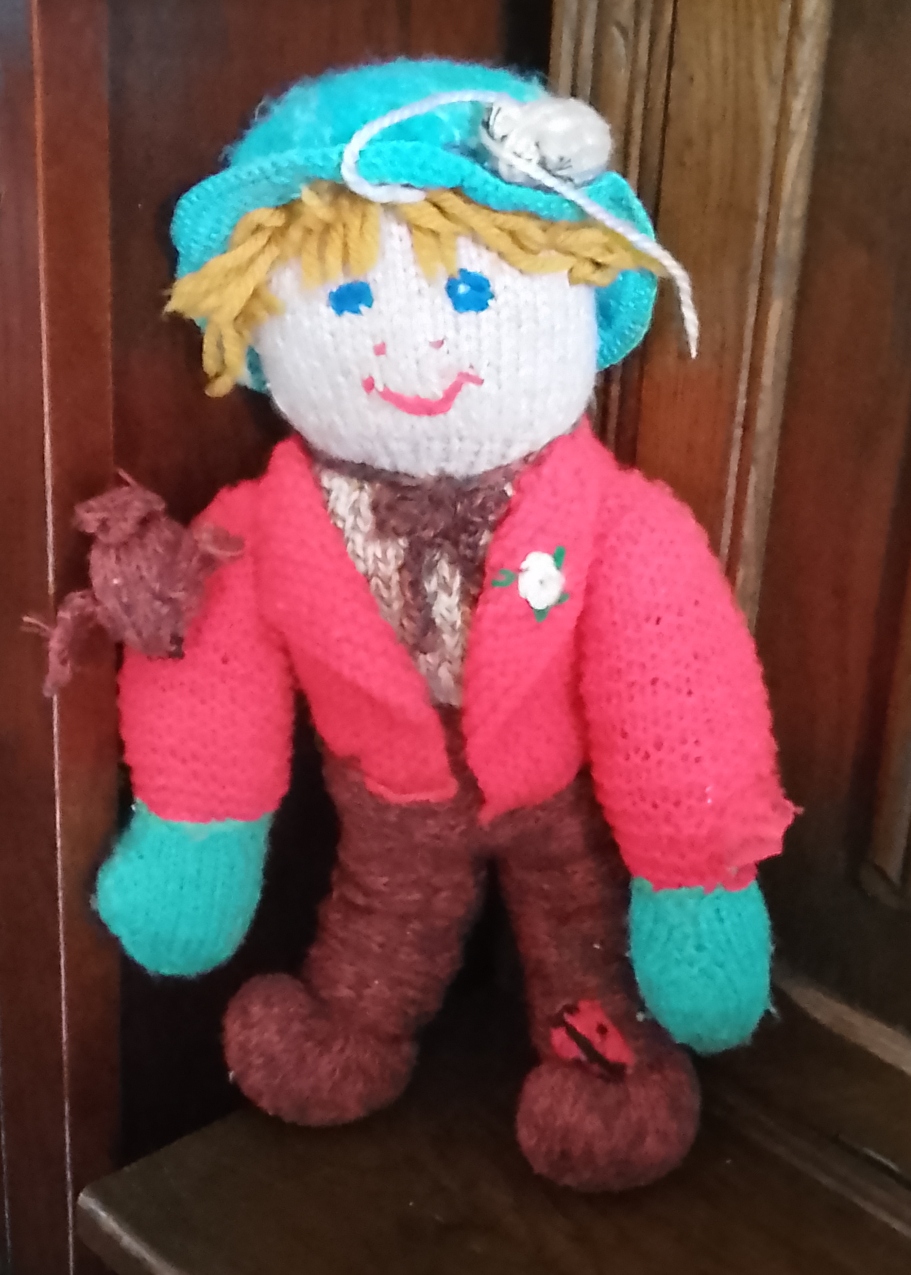 Every knitter has a project that stays with them. For me, it was a knitted scarecrow my grandmother made when I was little. It wasn’t bright or colourful like the ones you see today. She knitted it in darker, more muted shades because that was the wool she had, and she followed a pattern from one of the Jean Greenhowe magazines that were so popular at the time. I still have that scarecrow. It sits quietly on a shelf, a little wonky now, but full of character and memories.
If you’d like to know more about my own knitting journey, you can visit my About Suzy Cowper page.
What I didn’t realise back then was how much that scarecrow would shape the way I design today. Before I ever picked up needles myself, I was already fascinated by how something flat could become something alive. The shaping, the stuffing, the way the arms bent, the way the hat sat, the way the face had personality even though it was only a few simple stitches. It was my first introduction to what I now think of as sculptural knitting.
People often search for knitted scarecrow patterns, Jean Greenhowe scarecrows, or vintage knitted toys because they’re looking for that same feeling of nostalgia and charm. Those early toy patterns were clever. They taught knitters how to build shapes, how to create structure, and how to give a piece its own little soul. And without realising it, they taught me too.
When I design a tea cosy now, especially the characterful ones, I still think about that scarecrow. The way the fabric had to stretch and curve. The way the stuffing changed the silhouette. The way a simple knitted shape could suddenly become a person, a creature, or a story. That’s the heart of TeaCosyFolk; knitting that isn’t just decorative, but expressive. Knitting that tells a story. You can see all my tea cosy designs here.
Sculptural knitting is really just engineering with yarn. You’re building forms, balancing proportions, and shaping fabric so it behaves the way you want it to. That scarecrow was my first lesson in all of that. It showed me that knitting could be more than rows and stitches. It could be characters, scenes, memories, and moments.
If you’ve ever knitted a toy, a scarecrow or a character pattern, you’ll know exactly what I mean. There’s something magical about watching a flat piece of knitting turn into something with personality. And if you’re someone who searches for nostalgic knitting patterns or vintage toy designs, you’re probably chasing that same spark of inspiration.
So this week’s Cosy Companion Guidebook is really a thank‑you to that old scarecrow. It’s a reminder that the things we make with love, even in the simplest yarn, can shape us for years to come. And it’s a little nudge to look back at the projects that first inspired you; because sometimes the beginning of your knitting story is the key to everything you create next.
Frequently Asked Questions
What inspired you to start designing sculptural knitting patterns
The very first spark came from a knitted scarecrow my grandmother made when I was little. Seeing how flat knitting could turn into a character made me fall in love with sculptural knitting.
Why do people still love vintage knitted toy patterns
Vintage toy patterns have a nostalgic charm and clever shaping. Many knitters remember them from childhood, and they’re a great way to learn structure, shaping and personality in knitting.
What is sculptural knitting
Sculptural knitting is the process of shaping fabric so it forms characters, scenes or three‑dimensional designs. It’s like engineering with yarn, balancing curves, proportions and structure.
How did a knitted scarecrow influence TeaCosyFolk designs
That scarecrow taught me how shapes, stuffing and simple stitches can create personality. It’s the foundation of the characterful tea cosies I design today.
Can beginners try sculptural knitting
Yes. Many knitters start with simple toy patterns or small character projects. They’re a fun way to learn shaping, structure and expressive details.
Tags: teacosyfolk