 |
Basket
0 items, £ 0.00

How to Knit Expressive Faces - Eyes, Mouths and Character Expression
A tea cosy with a face becomes a character, and expression is the key to its charm. Eyes, eyebrows and mouths work together to create personality, and small changes in placement or shape can transform the entire mood. This guide shows how to knit and position facial features with intention, giving your TeaCosyFolk characters warmth, humour and life through simple, precise techniques. It is about looking at the details that are often skipped over in patterns and turning them into something you can control and enjoy.
Main takeaway: Expressive faces in knitted characters depend on deliberate placement of eyes, eyebrows and mouths, not just following a brief line in the pattern.
One of the bugbears that crops up again and again in Facebook comments about knitted characters is the face. Makers often feel that their toy or tea cosy does not look quite how they imagined, and that the face has not done their knitting project justice. It is interesting, because we look at faces all day long in everyday life, yet when we come to create one in yarn and embroidery, we suddenly feel unsure or disappointed. That moment of doubt is very common, and it is exactly why taking a little extra time to think about placement, proportion and expression can make such a difference. Once you start to see faces as something you can build step by step, rather than a vague instruction, the whole process becomes more satisfying.
Why Designers Often Assume Makers Already Understand Faces
When I write and upload a knitting pattern to Crazypatterns, the instructions often say something simple like “take a length of black DK and embroider the face” or “add safety eyes here.” That is normal for knitting patterns, because designers usually assume crafters already know how to create a face and will have this part covered. The written pattern focuses on the structure of the cosy, the stitch counts and the shaping, and the face is treated as a finishing touch. But expressive faces are not automatic, and the pattern rarely explains how to place the eyes, shape the mouth or add personality. I wanted to share more about this overlooked stage of making a character tea cosy or chocolate orange cosy, because the patterns uploaded to Crazypatterns sometimes assume you already know how to bring the face to life. By slowing down and talking about faces directly, we can bridge that gap between the brief line in the pattern and the character you see in your mind.
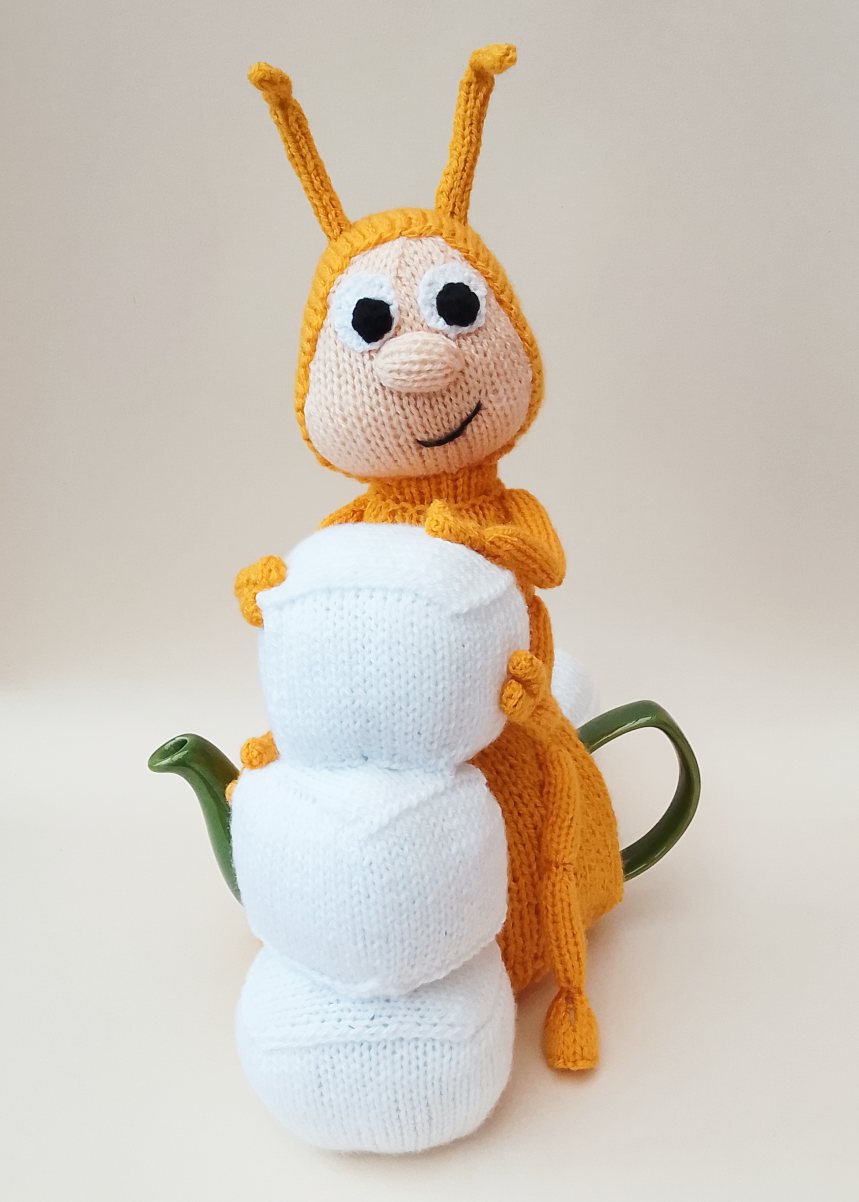 A tea cosy with a face is more than a functional object, it is a character. Expression is what gives a TeaCosyFolk design its charm, humour and personality. Knitting expressive faces is a skill that combines placement, proportion and subtle shaping. It is not about complicated techniques, but about noticing where each feature sits and how it relates to the others. Once you understand that, you can repeat it across different designs and feel more confident every time you add a new character to your cosy collection.
Eyes: placement, spacing and mood
Start with the eyes. They are the anchor of the expression and the first thing people notice. The distance between the eyes determines the character’s mood. Close set eyes create intensity or mischief and can make a character feel busy or energetic. Wider spacing creates calmness or innocence and gives a more open, gentle look. The height of the eyes on the cosy also matters. Higher placement gives a cheerful, open look that feels bright and welcoming. Lower placement creates seriousness or a slightly grumpy tone, which can be perfect for certain characters. If you are unsure, it can help to pin the eyes in place first and step back to see how the spacing feels before you commit to stitching.
The shape of the eyes is equally important. Round eyes feel friendly and simple, and they suit playful or childlike characters. Oval eyes feel thoughtful and can give a more mature or reflective expression. Narrow eyes feel sly or humorous and work well for characters who are meant to look cheeky or tired. If the design uses embroidered pupils, their direction changes the entire personality. Looking up feels hopeful or dreamy. Looking sideways feels cheeky and can suggest that the character is up to something. Looking down feels shy or sleepy. By changing only the angle of the pupils, you can reuse the same basic eye shape and still create a completely different mood.
Mouths and eyebrows: shaping emotion
The mouth defines the emotional tone. A simple curved line can express happiness, surprise or contentment depending on its angle and length. A straight line can be neutral or stern and is useful when you want a calmer or more serious character. A small upward flick at each end adds warmth and makes the face feel more approachable. A wider smile creates a bold, cartoonish feel that suits fun, exaggerated designs. For characters with lips or beaks, shaping and stitching must be precise to avoid distortion, because any unevenness will be very noticeable. It can help to mark the mouth lightly first, then stitch over it once you are happy with the shape.
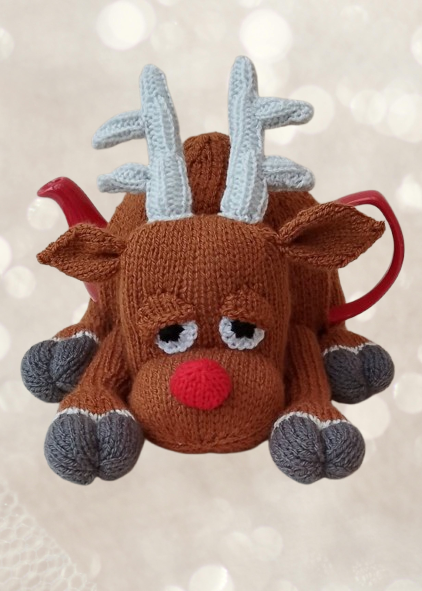 Eyebrows are the most powerful tool for expression. A slight tilt can convey curiosity, confusion, amusement or determination, and even a single embroidered line can transform the face. Eyebrows should be placed carefully relative to the eyes, too high and they look startled, too low and they look cross. A gentle curve can soften the expression, while a straighter line can make the character look more serious. If you experiment with different eyebrow positions on a single cosy, you will see how dramatically the mood changes, even when everything else stays the same. This is why eyebrows are worth a few extra stitches and a moment of thought.
Colour, symmetry and bringing the character to life
Colour choice also affects expression. Dark eyes feel stronger and more defined and can make the features stand out clearly from a busy background. Lighter eyes feel softer and can suit pastel or gentle designs. Mouth colour should contrast enough to be visible without overpowering the face, so that it supports the expression rather than dominating it. You can also use colour to suggest character traits, such as rosy cheeks for warmth or slightly darker tones for a more serious look.
Finally, symmetry is important, but not absolute. A tiny asymmetry, one eyebrow slightly raised, one eye a fraction lower, can make the character feel alive rather than rigid. Perfectly even features can sometimes look flat or mechanical, while small, intentional differences suggest movement and personality. The key is to keep those differences subtle, so they feel natural rather than accidental. Knitting expressive faces is about intention. Every stitch contributes to personality, and every decision about placement and colour adds to the story you are telling. When done well, the cosy stops being an object and becomes a character with its own story that people recognise and remember.
So when you are downloading a PDF knitting pattern from Crazypatterns and you reach the part where it simply says to embroider a face or add safety eyes, pause for a moment and think about what you want that face to express. Do you want the character to look happy, sad, sleepy, cheeky or mischievous. The emotion you choose will shape the whole personality of the cosy and how people respond to it. Faces are such an important part of the final character that it is worth taking a little extra time to decide how you want it to look and to place each feature with intention. That way, when you cast off and sew in the last ends, you will feel that the face truly matches the character you had in mind.
Tags: craft character design