 |
Basket
0 items, £ 0.00

Tea Cosies Through Time at Beamish Museum
What I found at Beamish Museum was a handful of tea cosies and a lot of inspiration for understanding how different households once made them.
This article explores how the different areas of Beamish Museum reflect the craft traditions behind British tea cosies, from pit village thrift to Edwardian embroidery and wartime make do and mend. It shows how historical settings can inspire modern makers to explore knitting, crochet, patchwork, rag rug techniques and other textile crafts.
Beamish and domestic craft history
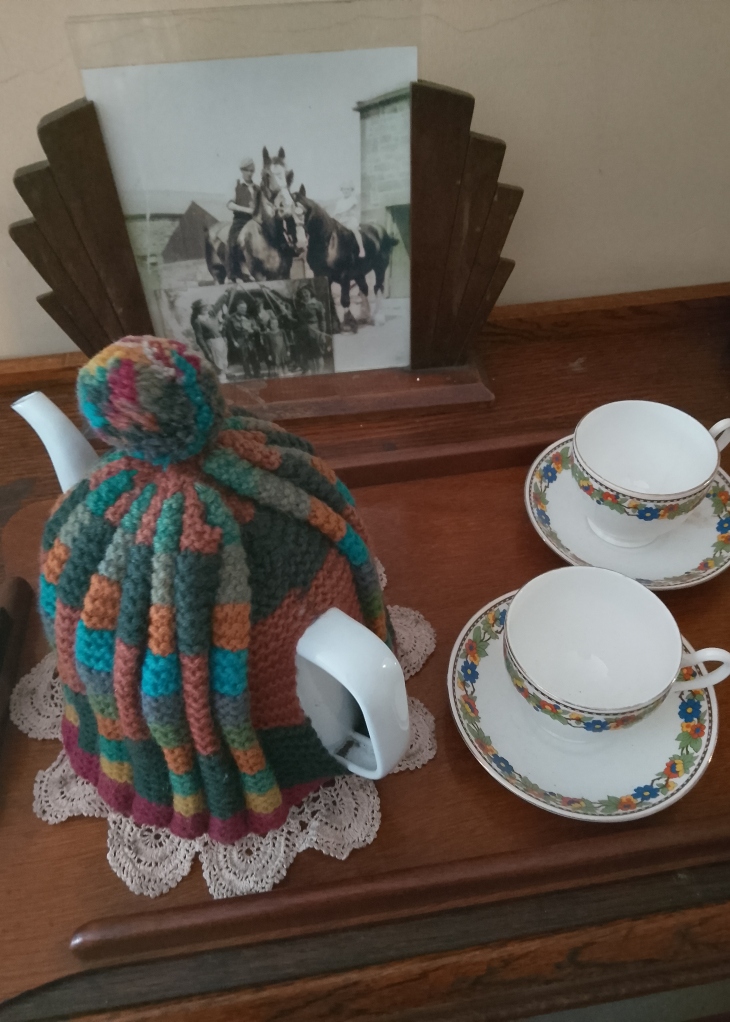
Walking through Beamish Museum, you are surrounded by the everyday objects that shaped home life. The museum preserves domestic history in a way that feels familiar, and it encourages you to look closely at the small things that once mattered. One of those small things is the tea cosy. Beamish does not display many of them, and during my visit I only noticed three, but the museum’s historic settings still help you understand the kinds of tea cosies people once made and the craft traditions behind them.
Each area at Beamish reflects a different moment in British domestic history, and each moment had its own materials, techniques and habits. Looking at these places with a maker’s eye reveals how tea cosies were knitted, crocheted, embroidered, patched, pieced and improvised depending on the home they belonged to.
Thrift and making in the pit village
In the pit village, life was shaped by thrift and practicality. Families used what they had, and craft was often a matter of necessity. A tea cosy here might have been knitted from leftover wool, crocheted from scraps or made from repurposed clothing. Rag rug techniques were common in mining communities, and it is easy to imagine someone using the same method to create a thick, insulating cosy for the teapot. Nothing was wasted, and textile craft was part of keeping a household running.
Middle class decoration and working class patchwork in the 1900s town
In the 1900s town, you see a different picture. This was a more comfortable, aspirational setting, and households with a little disposable income often bought decorative items or made them as part of home pride. Embroidered tea cosies were popular, usually featuring flowers, initials or neat motifs that reflected the fashions of the time. In contrast, patchwork belonged mainly to working‑class households, where fabric was precious and nothing was thrown away. A patchwork cosy might have been pieced from the still‑usable parts of worn garments, such as the upper sleeve of a shirt or the back panel of a dress, while the frayed elbows, collars and stained fronts were discarded. A cosy in this setting could be either decorative or thrifty, depending on the family’s circumstances, and both approaches show how domestic craft expressed class, resourcefulness and personal taste.
Resourceful making on the 1940s farm
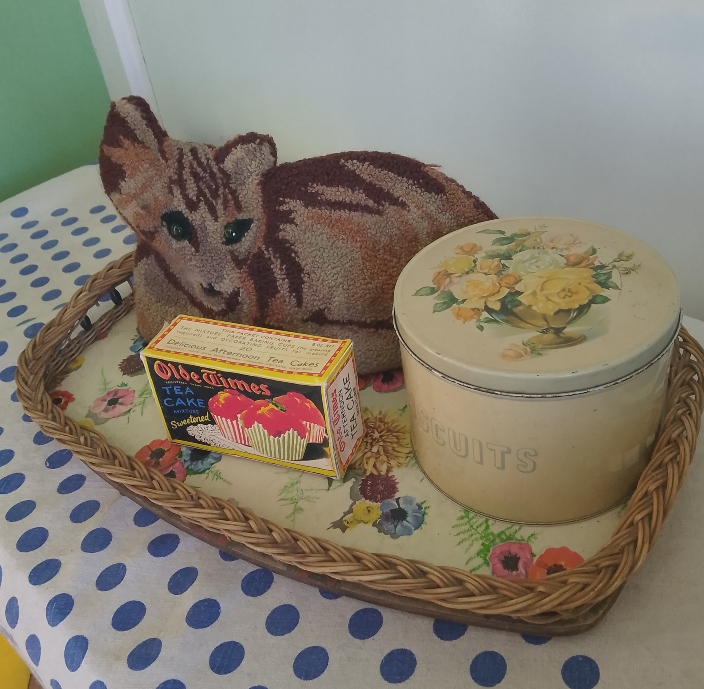
The 1940s farm shows yet another shift. With rationing and limited supplies, creativity came from necessity. Wool was precious, and many households unravelled old jumpers to reuse the yarn. Knitted tea cosies were often simple, sturdy and designed to last. Some were lined with fabric for extra warmth. Others were made from whatever materials were available, including felted wool or repurposed textiles. The cosy was part of the rhythm of the day, keeping the pot warm while families worked through long tasks.
These different settings at Beamish remind us that tea cosies were never just one thing. They were shaped by region, by class, by available materials and by the skills people had. They were practical objects, but they also carried personality. A cosy could be plain or decorative, simple or elaborate, depending on the home it belonged to. For anyone who works in textile craft today, this history is full of inspiration.
Modern inspiration for makers
Beamish encourages modern makers to explore techniques they may not have tried before. A rag rug style cosy made from strips of fabric. An embroidered cosy inspired by Edwardian parlours. A patchwork cosy using scraps from your sewing basket. A sturdy knitted cosy that echoes the resourcefulness of the 1940s. Each approach connects you to the long tradition of British domestic craft and the creativity that shaped it.
As someone who designs character driven tea cosies professionally, I find Beamish’s domestic settings a rich source of inspiration. The museum’s attention to everyday life highlights how much creativity went into ordinary objects, and how textile craft was woven into the fabric of home life. It is a reminder that small handmade items can tell big stories, and that preserving these traditions matters.
If you enjoy exploring historical craft techniques, Crazypatterns also has a wide range of tea cosy patterns inspired by traditional making styles. You can browse the tea cosy category at
Crazypatterns.
For anyone interested in how these traditions continue today, my own range of historically inspired tea cosies can be found at
TeaCosyFolk.
Article by Suzy Cowper, knitting designer and entrepreneur at TeaCosyFolk
Tags: traditional craf