 |
Basket
0 items, £ 0.00

Knitting in the Wrong Direction, Why It Happens and How to Spot It
A gentle, down‑to‑earth guide to what happens when you accidentally knit in the wrong direction. Learn how to spot it, why it creates little short‑row blips, what the fabric is telling you, and how to decide whether to fix it or simply keep knitting.
This guide covers the key things you need to know about knitting in the wrong direction: how to spot the moment it’s happened, what it looks like in both plain and patterned fabric, why those extra short‑row blips appear, how the stitches behave afterwards, and how to decide whether it’s worth fixing or simply carrying on with your knitting.
It also answers the most common questions knitters search for online, including; How do I know if I knitted in the wrong direction? Why does my knitting look reversed? and What happens if I accidentally turn my knitting?
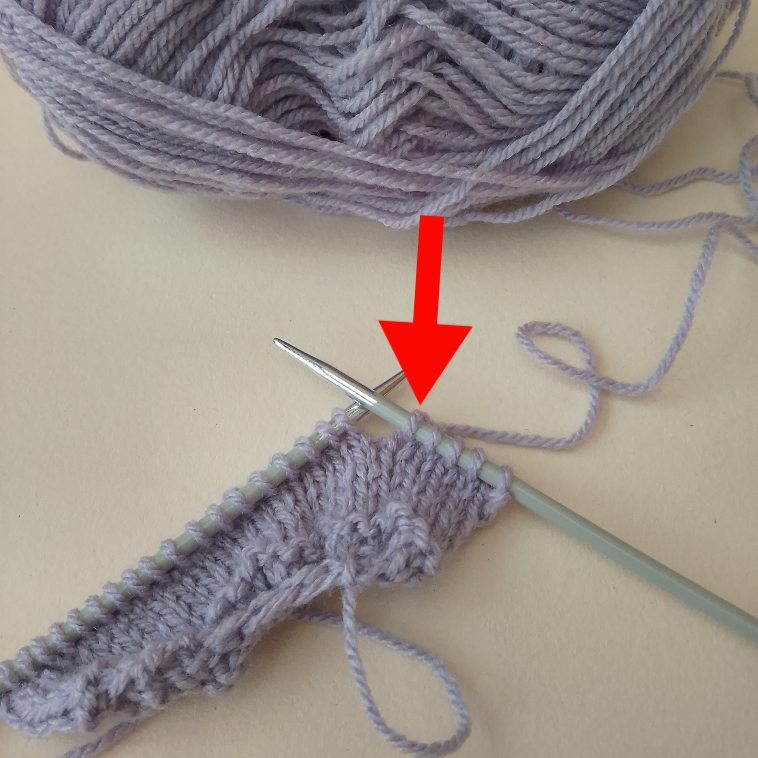
Last stitch worked sitting on the right‑hand needle, showing that the next row to knit is a right‑side row.
How to Tell If You Knitted a Row in the Wrong Direction
If you’re a right‑handed knitter, pick up your work with the right side facing you.
* If the working yarn is coming from the last stitch on the right‑hand needle, you’re on a right‑side row.
* If the working yarn is coming from a stitch on the left‑hand needle, you’re on a wrong‑side row.
This quick check helps prevent the classic mistake knitters search for online: Why does my knitting look like it’s going backwards?
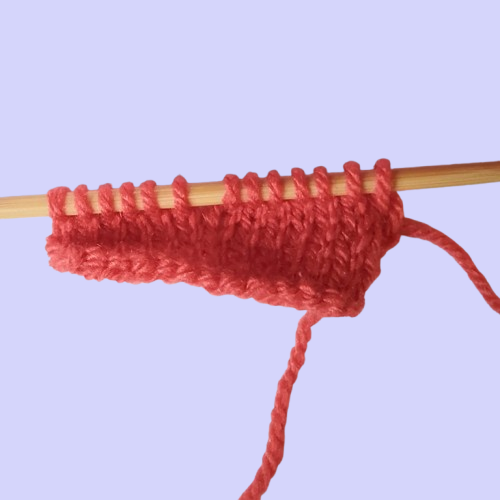
Effects of knitting in the wrong direction, showing uneven rows; one side appears longer than the other because extra rows were worked on that side.
What Happens When You Knit in the Wrong Direction?
If you pick up your work and start knitting without checking where you left off, you may have no idea which direction you’re working. This creates unintentional short rows; extra rows worked on only one side of the fabric.
This causes:
* Uneven shaping
* One side appearing longer than the other
* A small gap or hole where the direction changed
* Stitches that look slightly 'off' or misaligned
In the sample shown, the right‑hand side has two extra rows, so the stitches naturally part and form a small hole. On a small swatch it’s obvious, but on a large project; like a jumper back, you might never notice it happened.
Some knitters say every project should contain one mistake to release your soul from the work. There’s no science behind it, but it can make you feel better about a tiny blip.
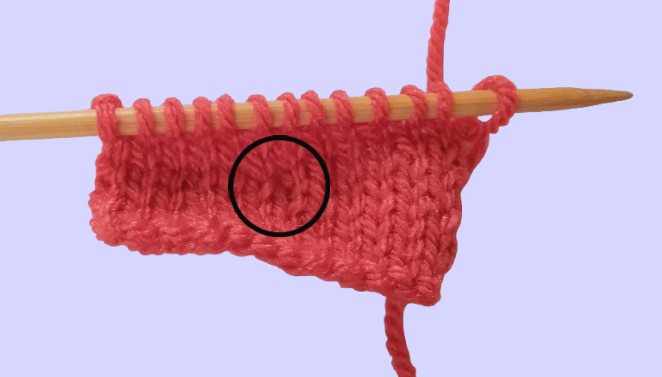
Wonky stitches are circled to highlight where the backwards‑knitting error shows up in the fabric.
What It Feels Like When You Knit After the Mistake
When you continue knitting after accidentally turning your work;
* The first few stitches feel normal.
* When you reach the last stitch on the extra rows side, the right-hand needle suddenly feels looser or more mobile.
* This is the moment your hands tell you something isn’t quite right.
Many knitters ignore this sensation or don’t notice it at all.
Should You Fix It?
The effect is usually negligible:
* A small hole
* A few wonky stitches
* Slight unevenness
To fix it, you’d need to rip back to the mistake. If you’re only a row or two past it, that’s manageable. If you’re 50 rows on, you may prefer to live with it.
Why Knitters Say; Let Me Finish This Row
The simplest and most reliable habit to prevent knitting in the wrong direction is to never leave a row half done. Stopping mid‑row is the biggest cause of accidentally turning the work and knitting back the wrong way. If you do have to stop suddenly, make a quick check before you start again: look at which stitch you last worked, which needle it’s sitting on, and whether the right side of the work is facing you. A stitch in time really does save nine.
Why It’s Easier to Spot in Patterned Knitting
In plain stocking stitch, knitting the wrong way is easy to miss. But in lace, cables, or textured patterns, the mistake becomes obvious quickly:
* Stitches don’t line up
* Holes appear where they shouldn’t
* Cables shift out of place
* The pattern looks wrong without an obvious cause
There’s no easy fix for two extra rows worked on one side. The safest option is always to go back to the last point you know was correct.
Some knitters use lifeline stitch markers every 10 rows or so. If something goes wrong, you only need to unravel back to the last marker.
FAQ: Common Questions About Knitting in the Wrong Direction
Accidentally turned my knitting; how do I fix it?
You have two choices: frog it or live with it.
You can try to even up the other side by repeating the mistake deliberately, but the result may not be aesthetically pleasing.
Why is my stocking stitch suddenly reversed?
Possible reasons:
* The designer intentionally reversed the right‑side row as a feature.
* There’s a typo in the pattern. Check whether the last row was meant to be odd or even.
* You accidentally turned your work and knitted the wrong stitches.
Why does my row look inside out?
This is reversed stocking stitch; when the wrong side showing on the right side.
It usually happens when:
* You knitted a purl row
* You purled a knit row
* You turned the work by mistake and worked back the wrong way
When you knit in the wrong direction, it can look dramatic in the moment, but it’s usually just a tiny short‑row blip that most knitters have made at least once. The fabric will show you what happened, your hands will often feel it before you see it, and the decision to fix it or keep going is entirely yours. Whether you choose to rip back or embrace the little wobble, understanding why it happened gives you confidence, and spotting it quickly becomes second nature. Knitting is full of small surprises, and this one is simply part of the journey.
You can explore the full Cosy Companion Guidebook for all the detailed knitting help and explanations and there’s also a set of quick, tea‑cosy‑focused FAQs and answers on the TeaCosyFolk Tips page for those moments when you just need a fast bit of reassurance or a simple fix.
Tags: cosy companion