 |
Basket
0 items, £ 0.00

The 7 Most Common Tea Cosy Problems And How to Fix Every Single One
Tea cosies look simple until you knit one. Then suddenly there are teapot shapes to consider, mysterious gaps appearing, ears that flop, and character faces that look like they’ve seen things. If you’ve ever wondered why your tea cosy doesn’t look like the picture, you’re not alone. These are the seven problems knitters run into again and again, and every single one has a clear fix.
Whether you’re knitting your first cosy or your fiftieth, this guide will help you understand what’s going wrong and how to put it right.Tea cosy problems are incredibly common, especially for knitters working with DK yarn, shaping rows or character features. This guide covers the seven most frequent tea cosy issues; from sizing and stuffing to shaping, seams and character faces and shows you exactly how to fix each one.
My tea cosy doesn’t fit my teapot
This is the number‑one issue in the tea‑cosy world.
Why it Happens
This is the most common issue knitters face, and it usually has nothing to do with skill. The real challenge is that teapots vary in shape, and yarn varies even more. Not all DK yarns are the same weight, even when the label says they are. Some DKs knit up plump and generous, others knit up thin and compact, and that difference shows immediately in the finished size. Tension plays a huge part too; two knitters using the same yarn and needles can produce noticeably different fabrics. Some patterns are also written for vague or imaginary standard teapots, which makes sizing unpredictable.
How to fix it
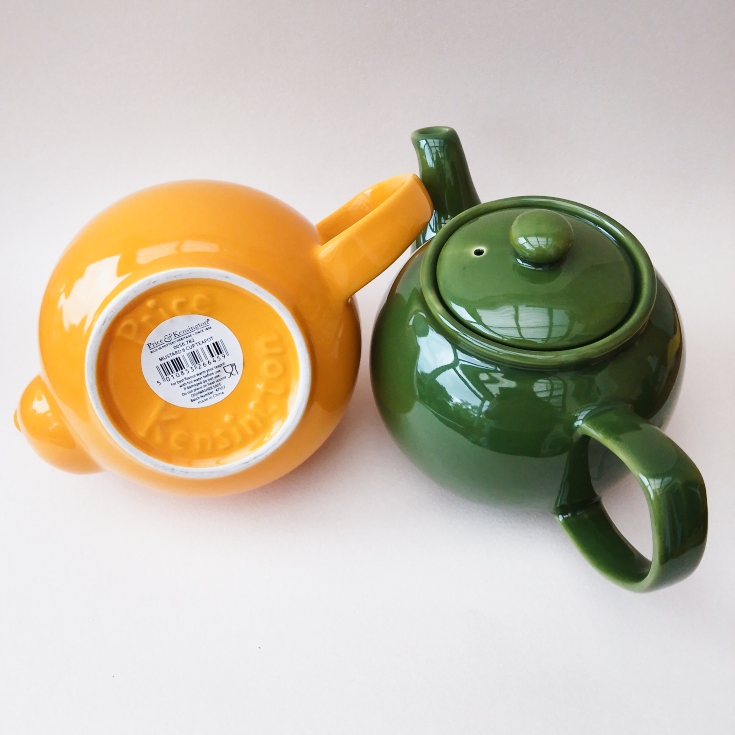
Measure your teapot around the belly as well as top to bottom. Choose patterns designed for a specific teapot shape rather than a generic one. Keep your tension consistent and avoid switching between very different DK brands within the same project. Tea cosies don’t need formal blocking; once they’re used on a hot teapot, the steam naturally relaxes the stitches and shapes the cosy. TeaCosyFolk patterns are all designed to fit Price and Kensington teapots, which come in three reliable sizes, so you always know exactly how big your finished cosy will be.
My tea cosy leans, twists or sags
A leaning tea cosy isn’t usually caused by tension or stuffing. It almost always comes from the seam being sewn unevenly from the crown down to the handle.
Why it happens
A leaning tea cosy is almost always caused by the seam being sewn unevenly from the crown down to the handle. If you look at a teapot side‑on, the top of the handle sits higher on the teapot body than the top of the spout. If the seam is sewn without the cosy being on the teapot, or if the knitter guesses how far to sew down, it’s very easy to sew too far on one side. Once the foundation seam is on the wonk, the whole cosy will look like it’s leaning, twisting or sagging, even if the knitting itself is perfect.
How to fix it
When sewing up the main part of the cosy, sew up six rows from the bottom for a medium Price & Kensington teapot. Then place the cosy on the teapot and use mattress stitch to sew the handle side first. Once that side is sewn, take the cosy off, turn it around, put it back on the teapot with the unsewn side now at the handle, and sew that side down to the handle height. This method guarantees that whichever way the cosy is put on the teapot, the seams match the true height of the handle and the spout, and the cosy will sit straight. Never guess if you want perfection.
The top of my tea cosy looks messy or off‑centre
The very top of the cosy is the part that makes knitters most nervous, because it involves gathering live stitches and trusting everything to come together neatly.
Why it happens
Sometimes the drawn‑up top of a tea cosy can look a bit messy. Maybe you had trouble drawing it up. Maybe the gathering thread snapped. Maybe the crown looks slightly off‑centre or the top looks lumpy. Most of the time it’s simply because the stitches weren’t gathered slowly enough, or the needle went through the yarn instead of through the stitch loop, which stops the top from pulling in smoothly. If the crown looks off‑centre, it’s usually not the gathering at all; it’s the side seam being too long on one side, which is explained in the section above, 'My tea cosy leans'.
How to fix it
Just breathe. Finishing the top of a tea cosy can feel like risky business because you’re taking live stitches off the needle and threading them onto a tapestry needle. It’s tempting to rush so you don’t lose any stitches, but more haste really does mean less speed. Relax and work slowly. It’s care that keeps the stitches safe, not speed.
Take your time to make sure the tapestry needle goes through the loop of each stitch and doesn’t split the yarn. If the needle goes through the yarn itself, the stitch won’t draw up properly and the top will look uneven. When you start pulling the thread to gather the top, go slowly so you can watch the stitches come together. Working slowly gives you time to flatten the work, adjust the stitches, and keep everything lined up neatly.
If you’re knitting a TeaCosyFolk pattern, you can be confident that the drawn‑up point of the main cosy will sit exactly on the teapot lid and won’t be off‑centre. If it does look off‑centre, check the previous problem, 'My tea cosy leans', because it will be the side seam pulling the crown out of alignment.
If the crown looks a little lumpy or messy, nine times out of ten it won’t be seen anyway; most TeaCosyFolk designs have a head or decoration that sits over the top. Just make sure the top knot or feature covers any unevenness. Knitters are often their own worst critics and worry about tiny details that non‑knitters never notice.
My tea cosy looks flat and lifeless
This is especially common with character cosies.
Why it happens
If you don’t like the face you’ve given your character, it’s usually because something about the expression isn’t sitting right. The features might not be in the best places, the proportions might feel a little off, or the face simply isn’t showing the emotion you imagined. Sometimes it just needs more personality; an extra detail, a shift in placement, or a small adjustment to bring the character to life.
How to fix it
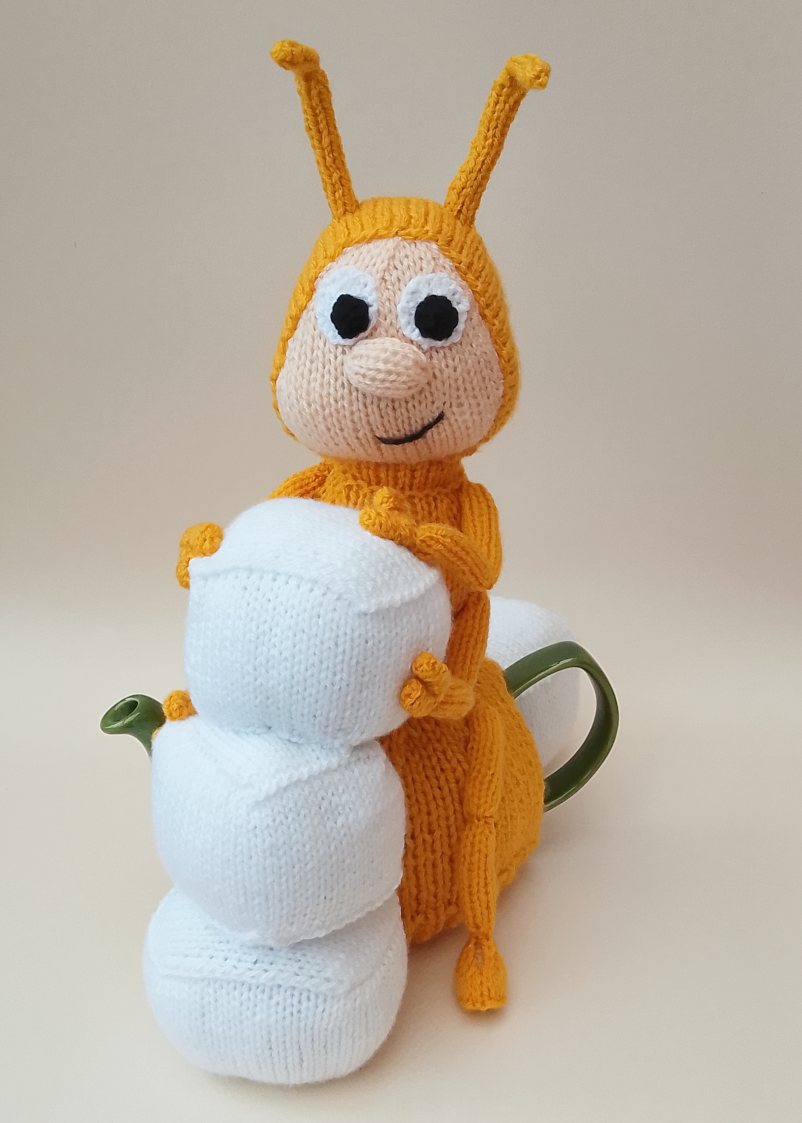
When you’re creating a character it’s always tricky to get the face right and give your cosy personality and expression. First check that the head looks properly aligned and well stuffed. A well‑stuffed head is often the missing ingredient. The head accessories in TeaCosyFolk patterns are designed to fit a firmly stuffed head, so if you place big features on an under‑stuffed head, the proportions won’t look right.
Some people like to use plastic safety eyes, and they can really bring a little sculpture to life. What I tend to do is make all the features first and pin them into place. Because they’re only pinned, I can move them around and try out different combinations until the expression feels right. If the eyes are going to be embroidered, I pop a couple of black beaded pins in to represent them so I can see how the face will look before I commit. This works especially well if I’m aiming for a particular emotion like scary, sad or cheeky.
Do play around with the features you have, and if the face needs more personality, add it. Embroider eyebrows or eyelashes, or dab a little blusher on the cheeks. It’s your creation — make it your own and enjoy getting creative.
My character cosy doesn’t look like the photo
This is the heartbreak moment for many knitters, but it’s fixable and often it doesn’t need fixing at all.
Why it happens
Knitting, stuffing, sewing up and composing a finished project is as unique as handwriting. Yours doesn’t look exactly the same as the pattern because yours was created by you, and that’s precious. Every knitter brings their own touch, their own style and their own way of interpreting a face. If your cosy doesn’t look like the photo, it’s usually because the expression, proportions or personality you’ve created are slightly different; not wrong, just yours.
How to fix it
To be honest, it often doesn’t need fixing. You wouldn’t expect to be able to copy a painting by Vincent van Gogh stroke for stroke. Just because you can knit doesn’t mean you have the same skill set or experience as the person who designed the pattern, and when we create something, we all put a little of ourselves into it. I can’t add a little of someone else into my work, just as others can’t add a sprinkling of TeaCosyFolk into theirs; it’s a unique ingredient.
However, I do know that some people love to replicate the pattern photos as closely as possible. That’s why, in my construction notes, I tell you exactly how I piece things together; which row a feature sits on, how far to pull the hair down the back, and where each detail rests. If you ever need a closer look at the tea cosies, I have a blog where you can see images of the patterns. If you click on the images, they enlarge to full screen so you can count rows and stitches for precise placement.
My ears, horns or features flop
This is a structural issue, not a knitting failure.
Why it happens
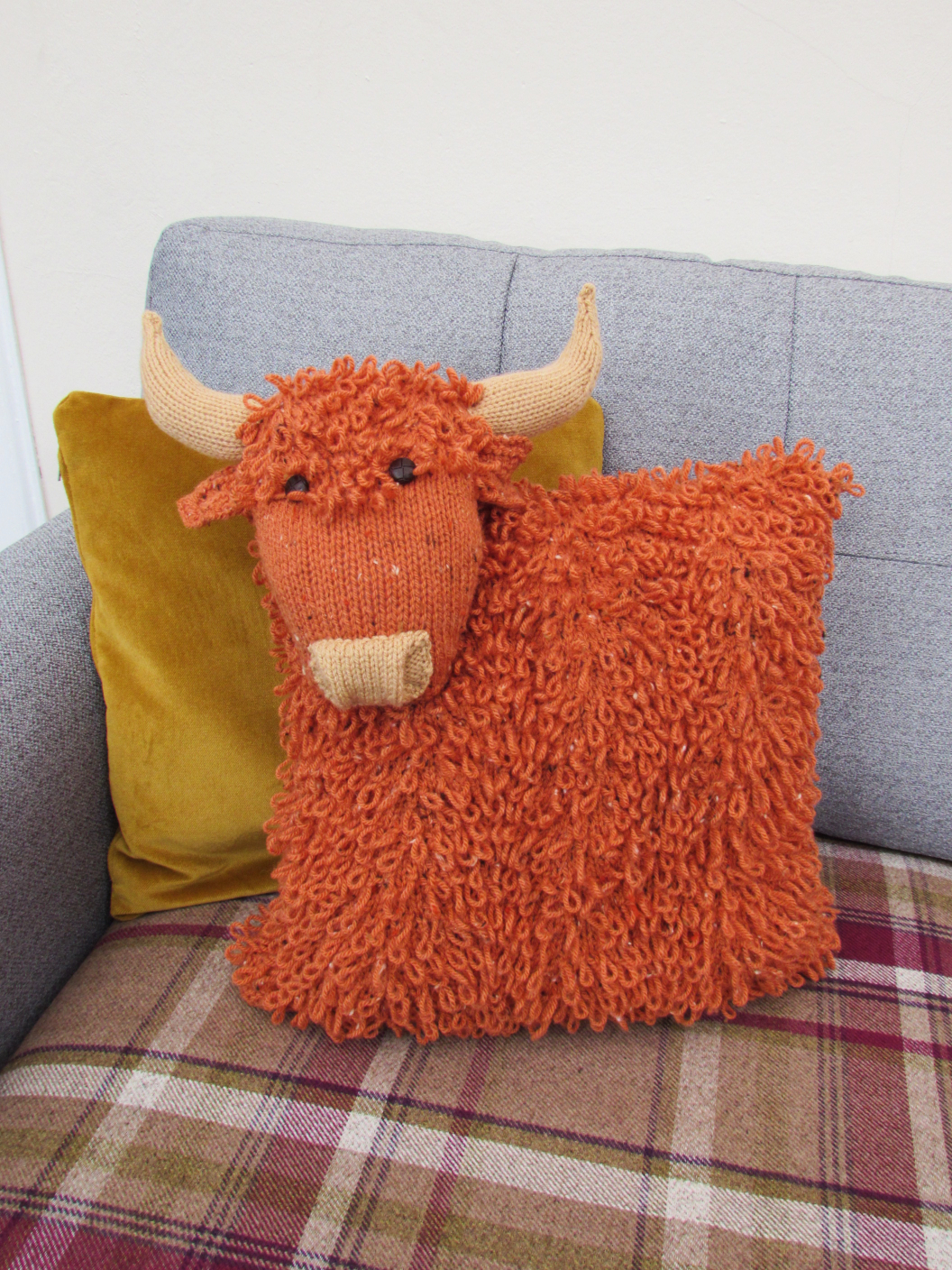
If you substitute the yarn for a thinner DK, the fabric won’t have the strength to hold itself up. Under‑stuffing is another big cause — if the piece isn’t firm enough inside, it simply can’t stand. Sometimes the side seam of the ear or horn isn’t positioned where it can give the most support, which makes the feature flop even if the knitting is perfect.
How to fix it
Use the suggested yarn, or choose a yarn that is genuinely the same thickness. If you’re unsure, ask a knitting group, your local yarn shop, or an AI application for help comparing yarn weights. But the biggest fix is stuffing; if you want something to stand, it needs to be stuffed firmly.
Also think about where the side seam of the appendage sits. The side seam is usually the strongest part of the piece, so place it at the centre top or at the back where it can give the most support.
Another trick is to cut a small piece of Funky Foam to slip inside the feature. It works in the same way knitters used to use cardboard years ago, but Funky Foam is waterproof and durable, so it won’t collapse or disintegrate when the cosy is washed.
I keep getting lost in the pattern
This is the quiet frustration knitters rarely admit.
Why it happens
Patterns can feel overwhelming when there’s shaping on both sides, lots of small sections, or frequent row changes. It’s easy to lose your place if you’re reading on a screen, knitting while tired, or chatting in a group. Most of the time it isn’t the pattern at all — it’s simply that your concentration has dipped for a moment.
How to fix it
There are a few ways to keep track of where you are in a pattern. If you print the pattern out, you can simply tick off each row as you complete it. Because the patterns are digital downloads, you can print a fresh copy every time you knit the cosy again.
Digital row counters are brilliant too; just click the button at the end of each row and you’ll always know exactly where you are. When a pattern is particularly detailed, with lots of shaping or lacework, I place a ruler under the row I’m working on. That way, when I look from my knitting back to the pattern, my place is instantly obvious and I don’t have to skim‑read to find it again.
Sometimes the issue isn’t the pattern at all; it’s my concentration. If I’m tired, I can’t always follow a busy pattern and I just need to walk away and come back after a good rest. Another time my focus slips is at knit and natter groups. Laughing and chatting means my knitting gets less attention than it needs. If you go to social knitting groups, take something simple that doesn’t require much thought.
Final thoughts
Tea cosies are joyful, sculptural, practical little knits, but they come with their own quirks. Once you understand these seven common problems, you’ll knit with more confidence, more accuracy, and far fewer 'why is this happening' moments. And if you ever find yourself stuck, the Cosy Companion Guidebook is here to help you through every stitch, pleat, ditch and decrease.
Tags:
tea cosy troubleshooting, knitting problems, tea cosy tips, character tea cosy help, floppy ears knitting, knitting mistakes, knitting support, tea cosy guide, TeaCosyFolk advice, knitting confidence, pattern help, knitting shaping issues, stuffed knittin